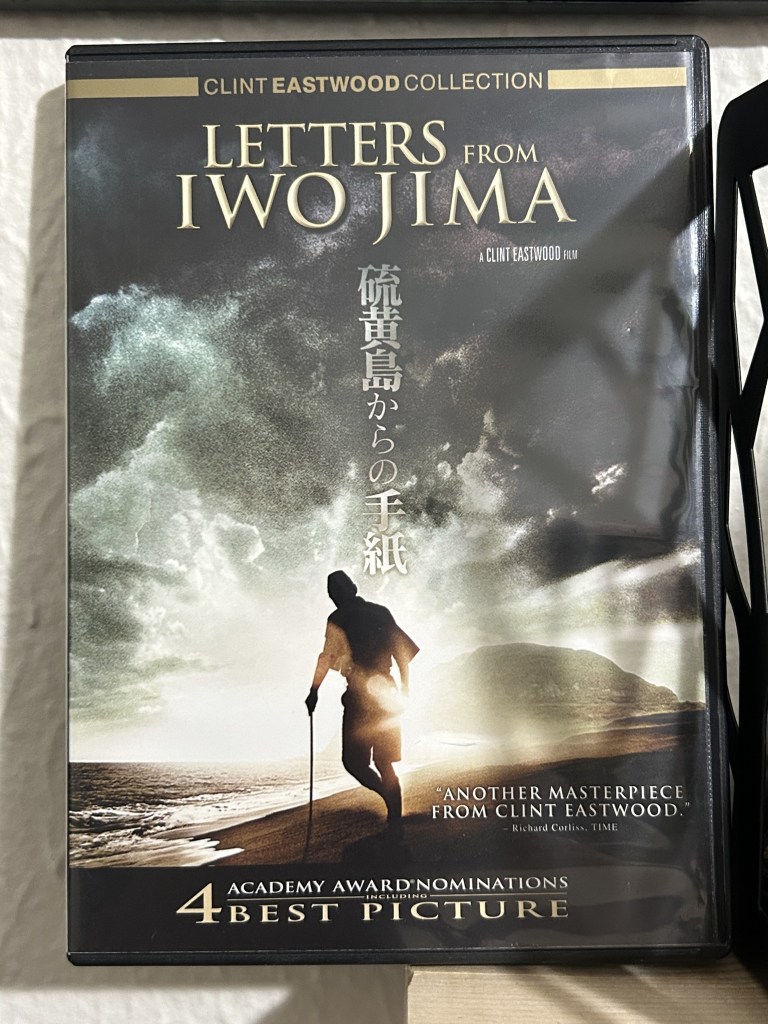
Letters from Iwo Jima 2006, directed by Clint Eastwood
Rating: 10/10
Released only two months after Flags of Our Fathers, Letters from Iwo Jima tells the story of the battle of Iwo Jima but from the Japanese perspective. Instead of jumping back and forth through time like that other film, this one is much more straightforward and plays to Eastwood’s directorial strengths, despite being about the war from a non-American perspective.
The war scenes in Flags of Our Fathers are the weakest part of that movie, but here the movie is almost entirely war scenes, and it works so well. We are there in the action with these soldiers and everything about the film (acting, direction, writing, cinematography, etc.) all make us really feel that. The panic and stress from the moment is extremely clear to the audience whereas the struggle in Flags was understood but not really felt on more than an intellectual level for me. What works for me specifically here I think is that we spend a lot of the time in underground tunnels that really adds to the sense of claustrophobia—one of my favorite war films is Kanal about resistance fighters in Warsaw who are trying to evade the Nazis in the suffocating sewers. Tunnels, sewers, and even submarines all give these kinds of movies such believable intensity for me, and to have such caliber of filmmaking in this one makes it even better.
This movie works amazingly on its own, but as part of a double feature or even as part of Eastwood’s overall oeuvre it works even better. Flags of Our Fathers I felt suffered by being compared (in my mind) to this masterpiece, but this one works even better as a partner film to that one because knowing the story behind the iconic American photo from Iwo Jima and also the fallout of the men from that photo makes the story of the Japanese soldiers they defeated have even more resonance. That other film gives this one deeper meaning, even though on its own it is still a masterful war narrative. It also stands out amongst Eastwood’s other films where he usually focuses on American exceptionalism or what it is to be American, and what kind of men he thinks make up the best of America, so to see him take similar stories of heroic masculinity and what makes a good man and do it about Japanese characters really makes me appreciate his entire filmography more—he is true to his word and really just respects good people, not specifically because of their nations. I also appreciate that the way his men in Letters from Iwo Jima are masculine are definitely coded as Japanese culturally and it’s not saying that these were good men because they fit into the idea of what makes a good man in America, the way that Gran Torino kind of falls into a trap like that.
As its own film, Letters from Iwo Jima is fantastic. As part of a double feature, it is a superior half that redeems its lackluster predecessor. As part of an overall body of work, it really emphasizes what I love about Eastwood’s sensibilities and demonstrates that he isn’t just pushing a nationalist agenda. Overall, no matter how you look at this movie it is a masterpiece.
 The Movie Room
Leave a comment